

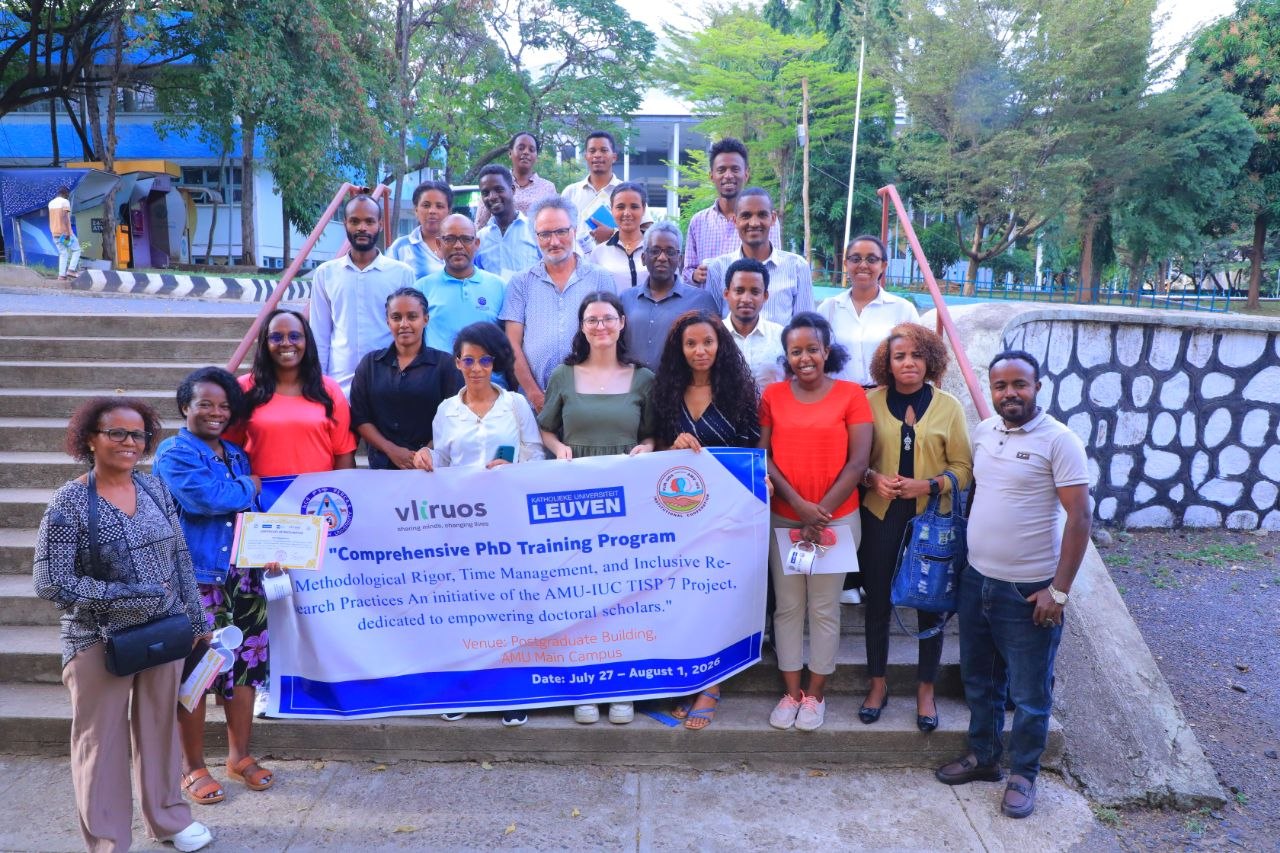
Arba Minch University–Institutional University Cooperation (AMU-IUC) Project, through its Transversal Institutional Sub-Project (TISP 7), successfully conducted a six-day International-Standard PhD Training on Methodological Rigor, Time Management, and Inclusive Research Practices from July 27 to August 1, 2026. The training equipped a new generation of Ethiopian researchers with advanced knowledge, practical skills, and international perspectives to conduct high-quality, impactful, and inclusive research. Click here to see more photos.
The training brought together 25 PhD candidates, including 13 women, from Arba Minch University, Wolaita Sodo University, Worabe University, and Wachemo University. Throughout the six-day programme, participants received intensive training in research methodology, scientific writing, systematic literature review, research ethics, gender and social inclusion, artificial intelligence (AI) and digital research tools, stakeholder engagement, scientific publishing, academic networking, conference presentation skills, and effective time management. Practical exercises and field visits complemented the classroom sessions, enabling participants to connect theoretical knowledge with real-world research applications.
Dr. Teklu Wogayehu, Vice President for Research and Cooperation at Arba Minch University and AMU-IUC South Project Coordinator, praised the training as a major milestone for first- and second-year PhD candidates. He stressed that the initiative is vital for boosting research quality and innovation across the region while extending his sincere appreciation to the AMU-IUC Project and TISP 7 for organizing the training for Arba Minch University and neighboring partner universities.
Opening the training, Dr. Fassil Eshetu, AMU-IUC Project Manager, said the event marked the second international-standard PhD training organized under the AMU-IUC Project, following the successful inaugural training held last year. He encouraged participants to make the most of the opportunity to strengthen their research competencies, broaden their academic horizons, and contribute to Ethiopia’s development through high-quality research and innovation.
In her opening remarks, Prof. Veerle Draulans, TISP 7 Leader (North), emphasized that research excellence must go hand in hand with gender equality, diversity, and inclusivity. She encouraged participants to integrate these principles throughout their doctoral research, noting that inclusive research produces stronger scientific evidence and delivers greater benefits to society.
Dr. Steffan Van Dondeyne, Guest Professor at Vrije Universiteit Brussel, emphasized that the course was designed to provide Ethiopian doctoral candidates with an international-standard learning experience comparable to that of PhD students studying abroad. He encouraged participants to formulate relevant research questions, apply rigorous scientific methodologies, communicate their findings effectively, and ensure that their research contributes to society by embracing the principle of "leave no one behind." He also stressed that publicly funded research should be widely disseminated so its benefits reach communities, policymakers, and future researchers.
During his session on International Academic Collaboration and Networking, Dr. Fassil Eshetu highlighted the importance of establishing strong international research partnerships that enhance institutional capacity, promote knowledge exchange, and transform scientific discoveries into practical solutions for sustainable community development.
Speaking during the training, Dr. Genaye Tsegaye, TISP 7 Leader (South), highlighted the achievements of the TISP 7 Sub-Project in promoting gender equality and inclusivity at Arba Minch University. She noted that the establishment of a daycare center on campus has created a more supportive environment for female staff, enabling greater participation in research, teaching, learning, and leadership. She added that the training was designed not only to strengthen participants’ research capacities but also to encourage them to integrate gender and social inclusion into every stage of their research for greater academic excellence and societal impact.
Bayush Tesfaye, Gender and Outreach Coordinator of the AMU-IUC Project, underscored the significance of the training, noting that it was facilitated by distinguished national and international experts. Beyond the classroom sessions, she said, participants gained valuable hands-on experience through field visits to ongoing AMU-IUC-supported PhD research sites, including watershed and wetland restoration initiatives and animal feed improvement research. According to her, these practical experiences enabled participants to witness how scientific research can generate tangible benefits for communities while contributing to sustainable development.
Reflecting on the training, Eshetu Matewos, a PhD candidate from Wolaita Sodo University, and Bizuayehu Belete, a PhD candidate from Arba Minch University, described the programme as transformative and professionally enriching. They noted that the sessions on AI tools for research, scientific manuscript writing, international-standard research methodologies, and scientific publishing significantly enhanced their research knowledge and skills. They also praised the strong emphasis placed on gender equality and inclusivity, noting that these principles were integrated across all research disciplines and specializations, making the training relevant and beneficial for every participant.
The training concluded with participant presentations, peer-review sessions, individual research action plans, and a certificate award ceremony.
Arba Minch University
Spring of Wisdom!
For more Information Follow us on:-
Website - https://www.amu.edu.et/
Telegram - https://t.me/arbaminch_university
Facebook - https://www.facebook.com/ArbaMinchUniversityccd/ (h
YouTube - https://www.youtube.com/channel/UCOO_nclhMo8M3r74OyPBlVA
Public and International Relations Executive