- Details
Contact Us
Agegnehu Shara Shata
Dean, Faculty of Mechanical Engineering,
Lecturer, Faculty of Mechanical Engineering
Arba Mich University, Arba Minch Institute of Technology (AMiT)
Tel:- +25191687317
Email:-
P.O. Box: 21
AMIT
Arba Minch University
- Details
Undergraduate Study
Tuition Fees
Tuition fees will be charged according to the direction given by the Ministry of Education and the university.
Admission Requirements
Admissions to all regular undergraduate programs are processed through the Ministry of Education (MOE) of the Federal Democratic Republic of Ethiopia. This is currently true for all public Universities across the whole nation. Admissions to the continuing education program (CEP) are processed through the Institute’s registrar office based on the criteria set by Arba Minch University.
I. Admission to Regular Program
Students who have successfully completed the 10 plus 2 years preparatory secondary education and have secured a minimum cutoff point with high scores in Physics and Mathematics are eligible to join the regular undergraduate B.Sc. degree program in electrical engineering. This criterion is common to all Departments in the Faculties of Engineering. Depending on available spaces, diploma graduates from TVET (Technical Vocational Education and Training) in the fields of electrical engineering could be admitted based on availability of space and the vertical permeability criteria to be set by the Ministry of Education. Applicants with a minimum cutoff point and with high scores in Physics and Mathematics in foreign countries examinations equivalent to the 10+2 preparatory program are also eligible. The equivalence is determined by MoE.
II. Admission to Continuing Education Program
The criteria set for admission to the regular program will be employed as the criteria for admission to the continuing education program. Candidates who are diploma graduates from an engineering faculty, TVET or similar recognized college in the fields of electrical engineering with a minimum cutoff point will be admitted based on space availability the vertical permeability criteria to be set by the Ministry of Education. Limited numbers of junior staff such as technical assistants in relevant field may be admitted each year based on non-competitive basis provided that he/she:
A) Has served the University for a Minimum of 5 consecutive years
B) Meet the minimum admission requirement set for the program
C) Obtain letter of recommendation from the business & development vice president
D) Sign an undertaking to serve the University after graduation, at least two years of service for one complete year of study.
III. Department Placement
After successful completion of the orientation semester, students will choose academic departments according to their desired field of study. In view of the high number of applicants, admission to the electrical engineering department is usually on competitive basis based on academic performance. 20% of the total available places shall be reserved for females in addition to their right to compete in the 80% places.
IV. Graduation Requirements
Students must take and pass all the required courses to satisfy the requirements for graduation. The total number of credit points required for graduation with the degrees of Bachelor of Science in electrical Engineering is around 270 ECTS plus Industry-internship (30 ECTS).
Study Program
Click here to download the full year course.
Contact Us
Department of Electrical Engineering
P.O. Box 21
AMIT
Arba Minch University
Tel: +251-46881-2244
E-mail:
- Details
Overview
Computers are playing a major role in shaping the information or the knowledge age. They are also becoming essential in almost all activities of human life. Furthermore, with the decline in the price of computer hardware, nations, organizations and individuals that couldn't afford to have computers some years back can now afford to acquire them. However, the acquisition of the hardware is just one step towards computerization. The most important step is to be able to use them properly.
This necessitates for a high number of skilled computer scientists who will develop the necessary applications for the computers, administer the computer systems and decide on computer system acquisitions of the organizations and all automation processes in general.
Institutions, enterprises, organizations and companies in all sectors, public and private, are directly or indirectly being affected by the overwhelming information flow around the world. The effect goes down to small businesses and even to individuals. Every such unit must be equipped with tools that enable it to survive in such a dynamic world. Ethiopia is no exception and we must get ready to cope up with the influence of the knowledge age in our day to day life.
Currently, the country has no sufficient number of competent computer professionals in the various fields of Computer Science and IT. Various Governmental and other organizations have the desire to use modern information technology. However, there is an acute shortage of technical staff. The failure of many projects in IT in terms of implementation and sustainability is largely attributed to shortage of qualified professionals.
Realizing the importance of Computer Science and IT and the acute shortage of skilled manpower in the field, AMU launched an Advanced Diploma program in Computer Science in 1995 E.C (Closed).The first curriculum for B.Sc degree program was adopted in 1996 E.C. under Faculty of Engineering. In addition to this the university launched a second B.Sc Degree program in Information Technology in 2004 E.C. Currently both the programs run under Computer Science and IT department under Arba Minch Institute of Technology (AMIT).
The major objectives of the Department of Computer Science and It are the following:
- Education: to run Computer Science and IT programs to undergraduate, graduate, continuing and distance education students, as well as to offer Computer Science service courses to other Departments of the University.
- Research: to formulate an integrated research framework by
- Identifying appropriate research projects for graduate students and staff
- Initiating multidisciplinary research collaborations, and
- Presenting and publishing research results in appropriate national/international journals and conferences.
Department has been evaluating its curriculum over the last years through departmental assessment, peer evaluation and discussions with stakeholders.
Program Objectives
General Objectives of the Program
The primary objective of the program is to produce high quality graduates with an entrepreneurial and problem-solving mindset.
Specific Objectives
- Educating and training students for the very dynamic and rapidly changing science and technology market.
- Educating and training students to become life-long learners by providing them with a sound base in computer science, basic sciences as well as general education.
- Motivating students to be innovators who can respond very positively to the challenges and opportunities presented by new ideas and technologies.
- Laying a strong foundation for, and instilling confidence in students who may want to pursue post-graduate studies later in life.
Graduate Profiles
The program tries to achieve all of the outcomes suggested in the curriculum guide line document of computing programs.
Knowledge and Understanding
- Have thorough understanding of theories, principles and methods in computer science and IT;
- Articulate & demonstrate effectively computer & transferable knowledge& skills on computer science and IT practices, theories & principles;
- A good knowledge of how knowledge and understanding of essential facts, concepts, principles and theories relating to computer science and IT can be used to model and design computer system.
- An in depth understanding of the appropriate theories, practices, languages and tools that may be deployed for specification, design, implementation, and evaluation of software systems.
- Knowledge of how to present succinctly (orally, electrically or in writing) rational and reasoned arguments that address a given problem to be solved by computer.
- An ability to apply knowledge of computing and mathematics appropriate to the discipline.
- An ability to analyze a problem, and identify and define the computing requirements appropriate to its solution.
Practical Skills
- Analyze, design, develop & maintain software (Application &System software)
- Analyze, design, implement& administer computer networks
- Analyze, design, develop& administer database systems
- Analyze, design, develop, maintain, and administer web based applications
- Design, analyze and implement computer algorithms
- Apply the concept of professional practices and ethics in computer science and IT
- Specify, design and construct computer systems in a manner that is both innovative and creative.
- Critically evaluate and analyze computer systems (including any risks or safety aspects that may be involved in their operation).
- Deploy effectively the tools used for the construction and documentation of computer systems, with practical emphasis on understanding of the whole process involved in the effective deployment of computers to solve practical problems.
- An ability to design, implement and evaluate a computer-based system, process, component, or program to meet desired needs.
- Manage and run system development projects and IT related projects
Transferable skill
- Assist, participate and contribute in research activities in the area of computer science and IT.
- Provide computer technology related consultancy service.
- The ability to manage their own learning and development, time management and organizational skills.
- An appreciation of the need for continuing professional development in recognition for the need for lifelong learning.
- An ability to function effectively on teams to accomplish a common goal.
- An understanding of professional, ethical, legal, security, and social issues and responsibilities.
- An ability to communicate effectively with a range of audiences.
- An ability to analyze the local and global impact of computing on individuals, organizations and society.
- Recognition of the need for, and an ability to engage in, continuing professional development.
- An ability to apply mathematical foundations, algorithmic principles, and computer science theory in the modeling and design of computer-based systems in a way that demonstrates comprehension of the tradeoffs involved in design choices.
- Be prepared to enter a top-ranked graduate program in computer science and IT.
Admission Requirements
Admission requirements would be similar to the general institutional requirements.
Duration of the Study
- Students will not take different computing and IT courses at their high school study
- The nature of the discipline needs many practical works
Considering the above facts, program objectives and graduate profile, four years of study are required to complete the program sunder normal circumstances.
Graduation Requirements
The major graduation requirements for Regular and CEP program include:
Successful completion of all courses;
- A Cumulative Grade Point Average (CGPA) of at least 2.00;
- A Cumulative Grade Point Average(CGPA) of at least 2.00 in major courses;
- At least C grade in the Industrial Project courses;
- No grade of "F" or “I” in any of the courses.
Programs
Programs currently running in the Department of Computer Science and IT are:
- B.Sc. program in Computer Science
- B.Sc. program in Information Technology (Regular, Extension and Summer)
- M. Sc. program in Computer Science
- M. Sc. program in Information Technology
In addition, the Department offers a service course for all regular and extension students in the university
Staff Profile
Contact Us
Department of Computer Science & IT
Faculty Head: Getahun Tigistu– Mr.
E-mail:
Tel: +251927830695
P.O. Box: 21
AMiT, Arba Minch University
- Details
Civil Engineering Department has come into being with establishment of Arba Minch Institute of Technology in September 1997. Presently, the department offers BSc with an intake of 240 and 4 MSc programs with specialization in Geotechnical, Structural, Construction Technology and Management and Road & Transport Engineering with an intake of 30 students.
It has requisite number of PhD faculty, professors, other faculty and supporting staff covering all the specializations to run all the programs; it has been rechristened Faculty of Civil Engineering.
VISION
Achieving excellence by producing competent graduates equipped with in-depth knowledge of cutting-edge technology and social obligation.
MISSION
It aims to ensure skilled graduates must understand the social dimension that underpins the true meaning of development; hence all endeavors must satisfy human needs.
OBJECTIVES
- To prepare all graduates to be successful Civil Engineers, equip them to take on challenges through rigorous training
- To instill competence in latest know how; inculcate professionalism with effective communication skills and ethical values
- To groom students with effective leadership with moral values
ACADEMIC PROGRAMS
UNDERGRADUATE (BSc)
· Civil Engineering
· Surveying
POSTGRADUATE (MSc)
· Geotechnical Engineering
· Structural Engineering
· Construction Technology and Management
· Road and Transport Engineering
Program Outcomes: Above programs ensure graduates to possess following aptitudes:
· Engineering knowledge
· Problem analysis
· Design/development of solutions
· Conduct investigations of complex problems
· Modern tool usage
· The engineer and society
· Environment and sustainability
· Ethics
· Individual and team work
· Communication
· Project management and finance
· Life-long learning
Specific Outcomes
- Analyze and design civil engineering structural systems
- Apply principles of fluid mechanics in solving problems of hydraulic engineering
- Provide transportation solutions to connect any place integrating concepts of sustainable Development
Infrastructure
The Faculty of Civil Engineering is having well-equipped laboratories catering to the needs of BSc and MSc programs. Laboratory courses are designed to support taught concepts and project, dissertation and thesis works.
· Three Seminar Halls
· 20 classrooms
· Fluid Mechanics Laboratory
· Material Testing Laboratory
· Soil Mechanics Laboratory
· Construction Materials Laboratory
· Surveying Laboratory
· Highway Engineering Laboratory
Staff Profile
Click here to download the Staff Profile.
Contact Us
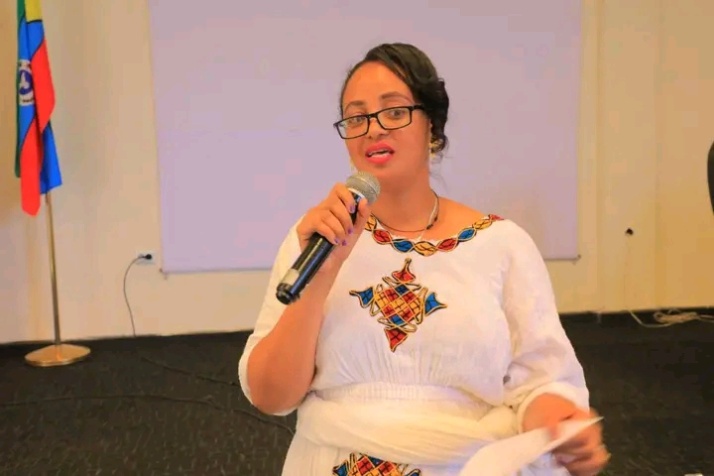
Hiwot Tsegaye Wolde(PhD)
Head Faculty : Hiwot Tsegaye Wolde (PhD, Asst. Professor)
E-mail:
Tel: +251912042781
P.O. Box: 21
AMIT
Arba Minch University
- Details
Architecture is the art and science of designing and constructing buildings. A wider definition would include within its scope the design of the total built environment, from the macro-level of town planning, urban design, and landscape to the micro-level of furniture and product design. Architecture, equally importantly, also refers to the product of such a design.
Architecture is a profession requiring long and intensive preparation. Architectural education develops the capacity in students to be able to conceptualize, design, understand, realize and meet the expectations of societies for sustainable human settlements and better working and living environments.
Architecture and Urban Planning Department as the name indicates comprises two components. The Architecture component concerns with the work of design and planning of buildings. Urban planning is an activity carried out to guide socio-economic and spatial developments of urban centers.
Brief history
The Architecture Department was launched in October 2005 under the Engineering Faculty based on the premises that there is a strong need of manpower in the field so as to realize the development plan of the nation. Currently the program runs a 5 years curriculum offering B.Sc. degree in Architecture and urban planning.
Mission
The department has a mission of promoting democratic thinking, offering high quality education and training, conducting need based research and consultancy, and rendering community service in order to contribute to the development endeavors of the country.
Vision
The Department shall be the center of excellence in teaching, research and consultancy in the fields of architecture in the region and produce professionals who are socially responsible, globally competitive and responsive to the specific needs of Ethiopia. To achieve the above stated visions, the department is moving towards better curricular and organizational readjustments. The curriculum revision task at hand is a part of this vital task since it marks:
A. A streamlining of the existing Department of Urban and Regional Planning into two separate but interrelated departments of Architecture & Urban and Regional Planning
B. A birth of a large and strong Environmental Design Institution comprising: School of Architecture and School of Urban and Regional Planning.
Academic program
Architecture is an interdisciplinary field that comprises several major components: humanities, social and physical sciences, technology and the creative arts. "Since architecture is created in a field of tension between reason, emotion and intuition, architectural education should be regarded as the manifestation of the ability to conceptualize, co-ordinate and execute the idea of building rooted in human tradition."
The future of architecture also depends on an understanding and assimilation of the achievements of other disciplines and professions. Although, like other branches of professional education, it is primarily assigned the task of educating future architects, architectural education is, generally, part of the university system and must adjust to and benefit from the traditions of the university, such as doing research and seeing the professional practice within the context of society and science.
Research
The Department of Architecture (More appropriately, A School of Architecture, Urban and Regional Planning) is to undertake researches in the areas of:
Urban dynamics
- Urban growth and land resource management
- Urban-rural linkage
- Urban revitalization
Housing
- Housing design, cost , affordability and identity
- Socio economic development and housing
Urban infrastructure planning and management
- Land use planning
- Local and low-cost building materials
- Urban community development
- Urban life style changes
Teaching-Learning Methods
Methodology
- Design and planning projects backed by classroom lectures, tutorials and assignments
- Intensive consultations and one-to-one discussions on proposed ideas and design solutions
- Lectures by practicing professionals and resource persons on a periodic basis
- Interactive based “Blended E-Learning” and other such self learning modules,
- Workshop Practice and Laboratory Exercises,
- 3D Model Studies,
- Field visits related to community development/intervention
- Practical and development oriented planning and design projects
- Inpidual and group seminars/ project work presentations
- Group tasks/discussions/Case studies
Core Areas of Specialization
- Architectural Design Specialized
- Urban Design
- Digital Design Engineering
- Interior Design
- Landscape Architecture
- Environmental Studies
- Ecological Planning
- Project Management
- Facility Management
- Building Construction and Technology
- Appropriate Building Technology
- Construction management
- Urban planning
- Rural planning
- Regional planning
Contact Us
Department of Architecture and Urban Planning
P.O. Box 21
AMIT
Arba Minch University
Tel: +251-46881-4980
Fax: +251-46881-0279/0820
E-mail:


